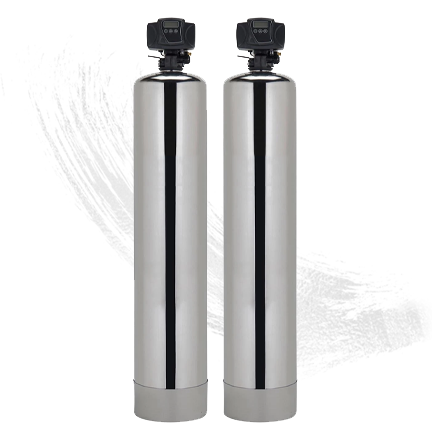
What Do They Actually Do for Your Home?
If you live in Southern California, you’ve probably noticed that the water coming into your home isn’t always ideal. You may notice an unpleasant chlorine smell or taste, spots on fixtures and shower doors, or mineral buildup around faucets. With so many water treatment products available, however, figuring out which system you actually need can get confusing.
Water Conditioning Systems can improve the quality of the water throughout your home, but it’s important to understand what they can—and cannot—do. A water conditioner isn’t necessarily the same thing as a water softener, and choosing the wrong equipment may leave you disappointed with the results.
At KP Plumbing, we install several types of water treatment equipment for homeowners in Diamond Bar and surrounding communities. Rather than assuming one system works for everyone, we look at the water problem you’re trying to solve and recommend the appropriate treatment.
What Are Water Conditioning Systems?
Water conditioning is a broad term, which is part of why homeowners can get confused when shopping for a system.
You’ll see equipment advertised as salt-free conditioners, no-salt water systems, whole-house conditioners and even salt-free water softeners. Despite the marketing terminology, these systems don’t all accomplish the same thing.
A traditional water conditioner can be an excellent choice when your primary concerns involve chlorine, chloramines, sediment, taste or odor. Depending upon the equipment, conditioning can significantly improve the water you use for bathing, showering, cooking and cleaning.
What it won’t necessarily do is soften hard water.
Water Conditioner vs. Water Softener
This is probably the most important distinction homeowners should understand.
A water conditioner does not remove the calcium and magnesium that cause hard water. Therefore, if you measure the hardness of the water before and after it passes through a typical conditioner, the hardness itself isn’t eliminated.
A traditional water softener works differently. It removes the calcium and magnesium responsible for hard-water problems.
Why does that matter?
Those minerals contribute to the scale and deposits you may see on faucets, fixtures, dishes and shower doors. They can also accumulate inside plumbing and water-using appliances.
If hard water is your primary problem, KP Plumbing recommends a properly sized water softener rather than relying on a conditioner marketed as a substitute.
When Is a Water Conditioner a Good Choice?
Although a conditioner isn’t a replacement for a water softener, Water Conditioning Systems can play an important role in improving household water.
A conditioner may be a good option if you want to:
- Reduce chlorine and chloramines
- Improve the taste and smell of your water
- Reduce dirt and sediment
- Improve water used for showering and bathing
- Provide better-quality water throughout the house
For homeowners who dislike the chlorine odor or taste of municipal water, the difference can be particularly noticeable.
Why Chlorine and Chloramines Matter
Municipal water suppliers disinfect drinking water to help keep it safe as it travels through the distribution system. Chlorine and chloramines are commonly used for this purpose.
By the time the water reaches your house, however, you may prefer to reduce those chemicals before using the water for drinking, cooking, bathing, and washing.
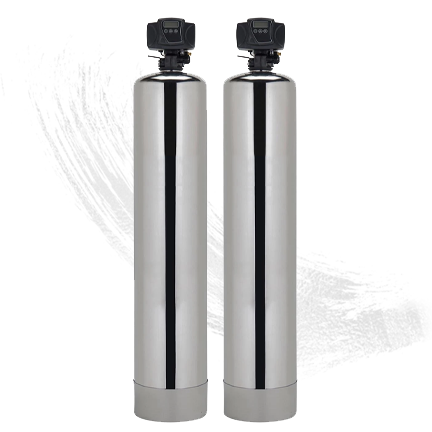
That’s one area where a whole-house conditioner can be particularly useful. Instead of treating water at only one faucet, a whole-house system treats the water as it enters your home.
That means the benefits extend to showers, bathroom sinks, the kitchen, laundry, and other water-using areas.
What About Hard Water?
Hard water is especially common in Southern California.
If you notice white or chalky deposits around faucets, spotting on glass shower doors and dishes, or scale around plumbing fixtures, hard water may be contributing to the problem.
Because a conditioner doesn’t actually remove the calcium and magnesium responsible for hardness, homeowners with significant hard-water problems should consider a true water softener.
Properly softened water can help reduce mineral deposits on faucets, fixtures, and plumbing while also protecting water-using appliances.
This is particularly important if you have a tankless water heater. Mineral scale can accumulate within a water heater over time and interfere with efficient operation.
Can You Have Both a Conditioner and a Water Softener?
Absolutely. In fact, combining systems can provide a more comprehensive approach to household water treatment.
Think of the two systems as performing different jobs.
The conditioner can address chlorine, chloramines, sediment, taste and odor, while the water softener addresses calcium and magnesium.
Used together, they can provide water that feels and tastes better while also reducing the hard-water minerals responsible for scale.
For many Southern California homeowners, this combination provides the benefits they’re actually looking for when they begin researching whole-house water treatment.
What About Reverse Osmosis?
Reverse osmosis, commonly called RO, is another option to consider.
An RO system is generally used when homeowners want high-quality water for drinking and cooking. Reverse osmosis uses a filtration process to remove a wide range of dissolved substances from water.
This is different from simply improving the taste of water by reducing chlorine.
For homeowners who want both improved water throughout the house and excellent drinking water at the kitchen sink, KP Plumbing can recommend a combination of whole-house treatment and reverse osmosis.
Don’t Choose a System Based on Marketing Claims
One reason KP Plumbing offers different types of water treatment equipment is that there isn’t one system that’s right for every house.
Unfortunately, water treatment products are sometimes marketed with claims that make them sound like they can solve every possible water problem.
A salt-free conditioner may be an excellent product when it’s used for the right purpose. But if you’re purchasing it because you expect it to produce truly soft water, you may not get the result you expected.
The first question shouldn’t be, “Which system should I buy?”
Instead, ask, “What problem am I trying to solve?”
Once you know that, choosing the appropriate equipment becomes much easier.
Protecting Your Plumbing and Appliances
Water quality doesn’t just affect what comes out of your faucet. It can also affect equipment throughout your home.
Hard-water scale can accumulate on plumbing fixtures and inside water-using appliances. Over time, that buildup may affect dishwashers, washing machines, conventional water heaters and tankless water heaters.
Reducing the minerals responsible for scale can help protect those investments.
Meanwhile, conditioning and filtration can improve the water you’re using every day for bathing, cooking and cleaning.
That’s why a properly designed water treatment system should take your entire household into consideration rather than simply treating one symptom.
Which Water Treatment System Is Right for You?
The answer depends on your water and what you want to change about it.
If your biggest complaint is chlorine taste or odor, a conditioner or filtration system may be appropriate.
If you’re fighting mineral deposits and hard-water scale, you probably need a water softener.
If you want excellent-quality drinking and cooking water, reverse osmosis may be part of the solution.
And if you want to address several of these concerns, combining systems may provide the best results.
KP Plumbing installs a variety of water treatment equipment, including conventional water softeners, conditioners, filtration systems and reverse osmosis systems. We can evaluate your needs and recommend a system based on what you actually want your water treatment equipment to accomplish.
Professional Water Conditioning Systems in Diamond Bar
Don’t let confusing terminology or exaggerated product claims determine what you install in your home. The best Water Conditioning Systems are the ones selected for your particular water quality and household needs.
KP Plumbing provides professional water treatment solutions throughout Diamond Bar, Rowland Heights, Walnut, Hacienda Heights, La Habra Heights, Chino Hills and Pomona.
Whether you’re concerned about chlorine, unpleasant-tasting water, hard-water deposits or protecting your plumbing and appliances, we can help you determine which type of treatment makes sense.
Call KP Plumbing at (909) 341-7249 to learn more about water conditioners, water softeners, filtration and reverse osmosis systems for your home.